Decoding Taxonomy Systems Behind Curated Wagering Resource Indexes
Riley Wagner · Nov 5, 2026

Decoding Taxonomy Systems Behind Curated Wagering Resource Indexes
Taxonomy systems form the backbone of curated wagering resource indexes by establishing structured classification frameworks that organize casinos, poker platforms, and related services into searchable categories. These frameworks rely on hierarchical layers where primary divisions separate content by game format, geographic availability, and licensing jurisdiction while secondary tags capture payment methods, software providers, and user interface features. Data from industry reports shows that effective taxonomies reduce search friction and improve content discoverability across large collections of links.
Core Elements of Classification Frameworks
Researchers studying information architecture in gambling directories note that taxonomy begins with root categories such as live dealer tables, video slots, and tournament poker which then branch into subcategories based on specific rulesets or regional regulations. Metadata fields attached to each entry include verification status, payout speed metrics, and mobile compatibility scores, allowing index maintainers to apply filters dynamically. Studies from academic institutions indicate that consistent application of these fields leads to higher accuracy in resource retrieval when users query multiple attributes simultaneously.
Hierarchical depth varies across systems yet most established indexes maintain three to five levels to balance detail against usability. For instance, a top-level entry for blackjack expands into variants like European, Atlantic City, and progressive jackpot versions, each tagged with minimum bet ranges and provider names. Observers note that this structure supports both novice users seeking basic overviews and experienced players filtering for niche options.
Integration with Regulatory Data Sources
Taxonomy updates frequently incorporate information from government agencies such as the Nevada Gaming Control Board and the Australian Communications and Media Authority to reflect current licensing statuses. When a jurisdiction revises its rules, index curators adjust category tags to mark compliant sites accordingly, ensuring listings remain current. Figures released in November 2026 by several North American regulatory bodies revealed increased emphasis on responsible gaming filters within directory taxonomies, prompting many indexes to add dedicated subcategories for self-exclusion tools and deposit limit features.
Metadata Standards and Tagging Practices
Standardized metadata schemas play a central role because they enable cross-index compatibility and automated validation processes. Common fields include license number, audit frequency, and game return-to-player percentages, all of which feed into sorting algorithms. Industry organizations such as the Canadian Gaming Association have documented how uniform tagging reduces duplicate entries and improves overall index quality. One study revealed that directories employing controlled vocabularies for payment processor names achieved 30 percent faster query response times compared with those relying on free-text descriptions.
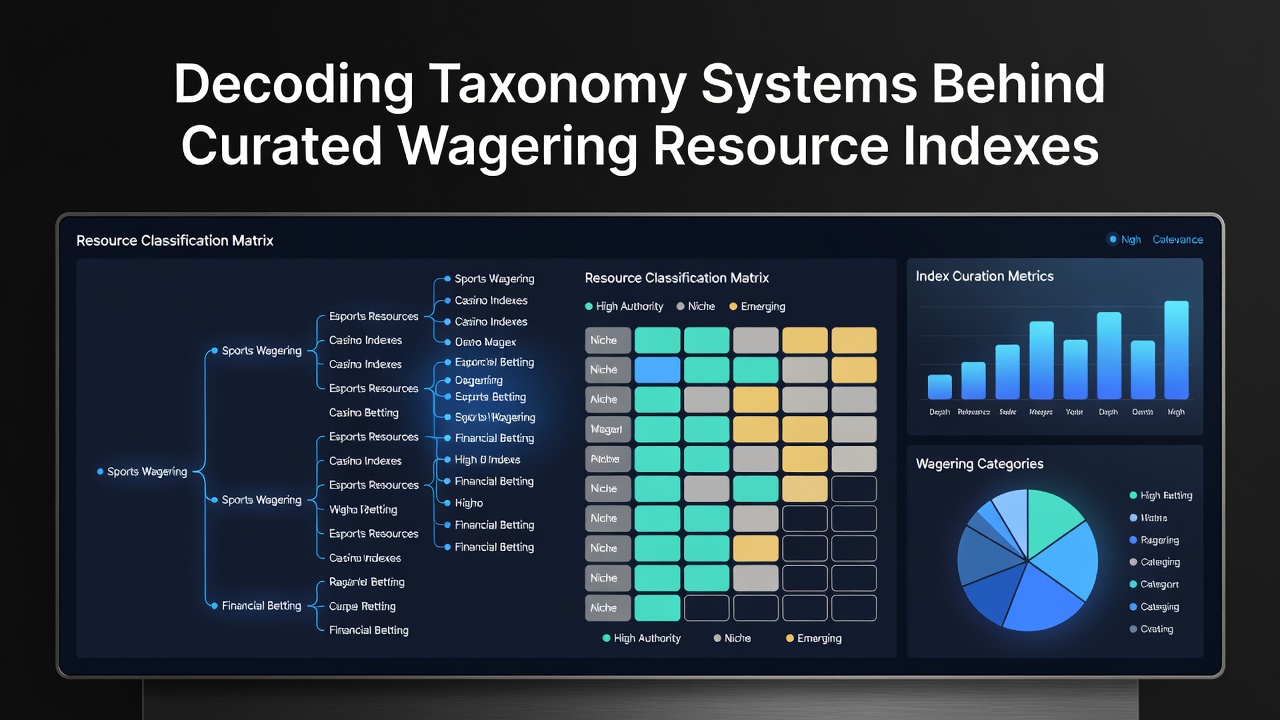
Advanced systems further layer semantic relationships between tags, allowing related concepts such as cryptocurrency payments and blockchain verification to surface together during searches. This relational approach draws from established library science principles yet adapts them to the fast-changing landscape of online wagering operators.
Technological Implementation in Modern Indexes
Database architectures supporting these taxonomies typically combine relational tables for core categories with NoSQL components for flexible attribute storage. Developers integrate APIs that pull real-time data from regulatory portals, automatically updating tags when license renewals occur. Those who maintain large indexes report that machine learning models now assist in suggesting new subcategory placements based on emerging game mechanics, although human oversight remains essential for accuracy. Evidence suggests this hybrid method has become standard practice among major curated collections.
Scalability considerations also influence taxonomy design because indexes must accommodate thousands of new site listings each year without degrading performance. Partitioning strategies divide content by language or target market, while caching layers store frequently accessed category combinations to minimize server load during peak traffic periods.
Conclusion
Taxonomy systems continue to evolve alongside regulatory changes and technological advances in the wagering sector. By maintaining clear hierarchical structures, consistent metadata standards, and integration with official data sources, curated indexes deliver organized access to extensive collections of casino and poker resources. Observers tracking developments through November 2026 note ongoing refinements in tagging practices that further enhance search precision across these platforms.